Strengthen Australia's Safeguard Mechanism to deliver emission reduction targets

CLIMATE BRIEFING
Australia's Safeguard Mechanism has limited emissions from the country's large industrial facilities, but it is not yet reducing greenhouse gas pollution at the speed required to meet our climate targets. Tightening baselines, limiting reliance on offsets, and improving transparency and accountability will increase the Mechanisms’ ability to ensure Australia’s largest polluters contribute meaningfully to meeting national climate commitments.
This climate briefing is part of our series of simple, easy-to-follow guides and email templates on big climate topics for Australia. They’re designed to help you get across the issues, feel more confident speaking up, and make it easy to send a message to your MP about the things you care about.

Background/context:

In 2016, the Abbott government legislated the Safeguard Mechanism as a key component of Australia’s Emissions Reduction Fund (ERF) framework to limit emissions growth from large industrial facilities - including mining, oil, gas, manufacturing, electricity generation, and waste facilities. The mechanism sets emissions baselines for major emitters, requiring facilities that exceed these baselines to purchase credits or offsets to remain compliant. Facilities that were successful in reducing emissions below their baseline can generate and accrue Safeguard Mechanism credits, whilst those facilities unable to oblige, were made to purchase credits to meet their compliance obligations. 

In 2023 significant reforms strengthened the scheme by introducing declining baselines for 219 of the nation's largest industrial facilities - meaning the emissions limit of each facility decreases every year. These changes were intended to ensure major industrial emitters contribute to Australia's legislated climate targets and its commitments under the Paris Agreement. Despite these reforms, many experts still consider the Safeguard Mechanism to be inadequate, and it is expected to undergo further reform in 2026. 

Experts have identified six limitations in the current framework:

    1. The mechanism has narrow coverage. Even after the 2023 reforms, the Safeguard Mechanism only covers 28-30% of Australia’s total emissions. This leaves the majority of the economy outside the policy, enabling 70%+ of Australia's industrial emissions to continue uncapped.
    2. It only applies to Scope 1 emissions, or those emissions that are created at the facility through daily operations. It excludes Scope 2 emissions - those created by the facility from the generation of electricity purchased from the national grid - and Scope 3 emissions, the downstream emissions generated outside of the facility - including those created when fossil fuels are exported and burned overseas. These fossil fuel exports are Australia’s biggest contribution to global emissions. 
    3. It regulates emissions only after a polluting project is approved and developed. There is no requirement for assessment of proposed projects against the Safeguard Mechanism’s baselines - meaning high emitting projects (including new fossil fuel projects) may never be subjected to a meaningful climate assessment prior to approval, and can proceed even if they will produce high levels of emissions.
    4. Heavy reliance on carbon credits delays real, on-site decarbonisation. While the framework was designed to offer flexibility, the baseline and credit scheme has allowed facilities to meet compliance obligations through offsets rather than undertaking emission reduction activities. This raises the question whether the mechanism is delivering real reductions in net emissions or facilitating companies to “cheat", whilst technically remaining compliant with their emission baselines. 
    5. Baselines are considered too generous. In some cases, baselines have been set higher than actual emission levels, facilitating emitters to generate and sell credits without making genuine strides in their reduction efforts. Chevron’s Gorgon LNG facility - regarded as one of the highest emitting gas facilities in the world - is an example of this concern: in 2023-24 the company reportedly operated under its emissions baselines, enabling them to generate and sell safeguard credits which assist other polluters meet its emissions targets. 
    6. The annual emissions decline generated by this mechanism may be too slow to meet our national emissions targets. The Government says the Safeguard Mechanism is intended to place industrial facilities on a trajectory consistent with Australia’s 2030 target and net zero by 2050 - however new modelling shows this depends heavily on assumptions about future fossil fuel production and technology uptake, and in many scenarios much steeper cuts are needed to stay on track.

The government will review the Safeguard Mechanism again in 2026-2027 to ensure the 2023 reforms are working as expected, and are effective in meeting our emission reduction targets. This is a once-in-a-decade opportunity to tighten the rules for fossil fuel projects and other high-emitting industries. This review is expected to examine key structural elements of the scheme, including baseline decline rates, reliance on offsets, and overall policy coverage, with a view to strengthening its ability to drive real, on-site abatement across major industrial emitters. 

Why is this important?

Without stronger reform, emissions from Australia's largest industrial facilities won’t fall fast enough to meet national climate targets, leaving Australia locked into high levels of industrial pollution and putting its Paris Agreement commitments at risk.

Desired outcomes:

The Australian government strengthens the Safeguard mechanism to ensure it delivers real, on-site emissions reductions from major industrial facilities. This must include:

  • Tightening baselines to make sure emissions fall faster and align with Australia's 2030 and 2050 targets
  • Limiting reliance on offset through carbon credits to instead prioritise genuine on-site emission abatements 
  • Expanding the mechanism’s scope so a larger share of Australia’s industrial emissions are regulated
  • Requiring new projects to be assessed against the Mechanism’s baselines

Who to contact:

  • All Labor MPs, including Senators, as they all vote in Caucus
  • Your local Federal MP (check on this website if you’re unsure who that is)
  • Key Federal Ministers (addresses in link) including: Climate and Energy Minister Chris Bowen; Treasurer Jim Chalmers; Prime Minister Anthony Albanese; Environment Minister Murray Watt; Resources Minister Madeleine King; Trade and Tourism Minister Don Farrell; Assistant Minister for Climate Change and Energy Josh Wilson; Special Envoy for Climate Change Adaptation and Resilience Kate Thwaites
  • Federal Senate Crossbenchers (addresses in link) including the Greens, Independents David Pocock (ACT) and Fatima Payman (WA), and Jacqui Lambie (JLN), who hold the balance of power in the Senate.
CLICK HERE TO LOG YOUR CONTACT WITH MPs

Resources:

Action you can take:

1. Email your MP and/or relevant Ministers:

If you need some help getting started with your email, here is an example. 

Please don’t copy it exactly - personalise it and tailor it to the MP you are writing to. 

In addition, when writing to a Minister or Shadow Minister, start by saying that you’re writing to them in their role as Minister for xxxx, otherwise they will probably just forward your email to your local MP.

[MP name]

[Member for …. or  Minister for ….]

Dear …

[personal statement - who you are and why you care]

While the 2023 reform to the Safeguard Mechanism was an important step forward, significant limitations remain. Less than one third of Australia’s emissions are covered by this scheme, the reliance on offsets might be delaying real action to reduce industrial emissions, and it may not be strong enough to deliver the pace of emissions cuts we need to meet our 2030 and 2050 climate targets. I’m particularly concerned that the scheme only applies to existing facilities, meaning new fossil fuel projects might not be subject to impact assessments prior to approval - meaning high-emitting projects can be approved unchecked. 

With the climate window rapidly closing, we need stronger action to ensure Australia meets its commitments under the Paris agreement. So, I am contacting you to ask:

Will you support stronger Safeguard Mechanism reforms in the 2026-2027 review, including tighter baselines and reduced reliance on offsets?

Will you ensure Australia’s largest industrial emitters deliver genuine onsite emissions that are aligned with our national targets?

Will you support amending the scheme to ensure high-emitting projects are subject to impact assessments in line with the Mechanism’s baselines?

I look forward to your response.

Sincerely,

Name

Address

Phone

(Note: your contact details are required if you want a reply)

2. Call your MP or Minister's office

This is a way to respond instantly to an issue and only takes a couple of minutes. 

Here is a suggested script to get you started:

Hi, my name is ….. and I’m a voter in [your electorate].

I’d like to speak to …..[name of MP]

(Staffer will probably say: I’m sorry they’re not available, can I take a message?)

Yes, thank you! Would you please tell them I’m worried that...

  • Australia’s Safeguard Mechanism is not currently delivering emissions reductions at the pace needed to meet our climate targets. 
  • The Safeguard Mechanism’s heavy reliance on carbon offsets - rather than direct emissions cuts - and current baselines may not be strong enough to drive real abatement from major industrial polluters.

And ask them to …. 

  • Support strengthening the Safeguard Mechanism through the upcoming 2026 reforms, including tightening emissions baselines, limiting reliance on offsets, and improving transparency and accountability to ensure real, on-site emissions reductions.

Thank you!

3. Visit your MP

Nothing beats a face-to-face conversation. Email your MP’s electorate office to ask for a meeting and follow up with a phone call a few days later. Get help on how to do this under the Democracy and Governance heading on our Issue briefings webpage.

(Last updated April 2026)

 Fast facts on climate:

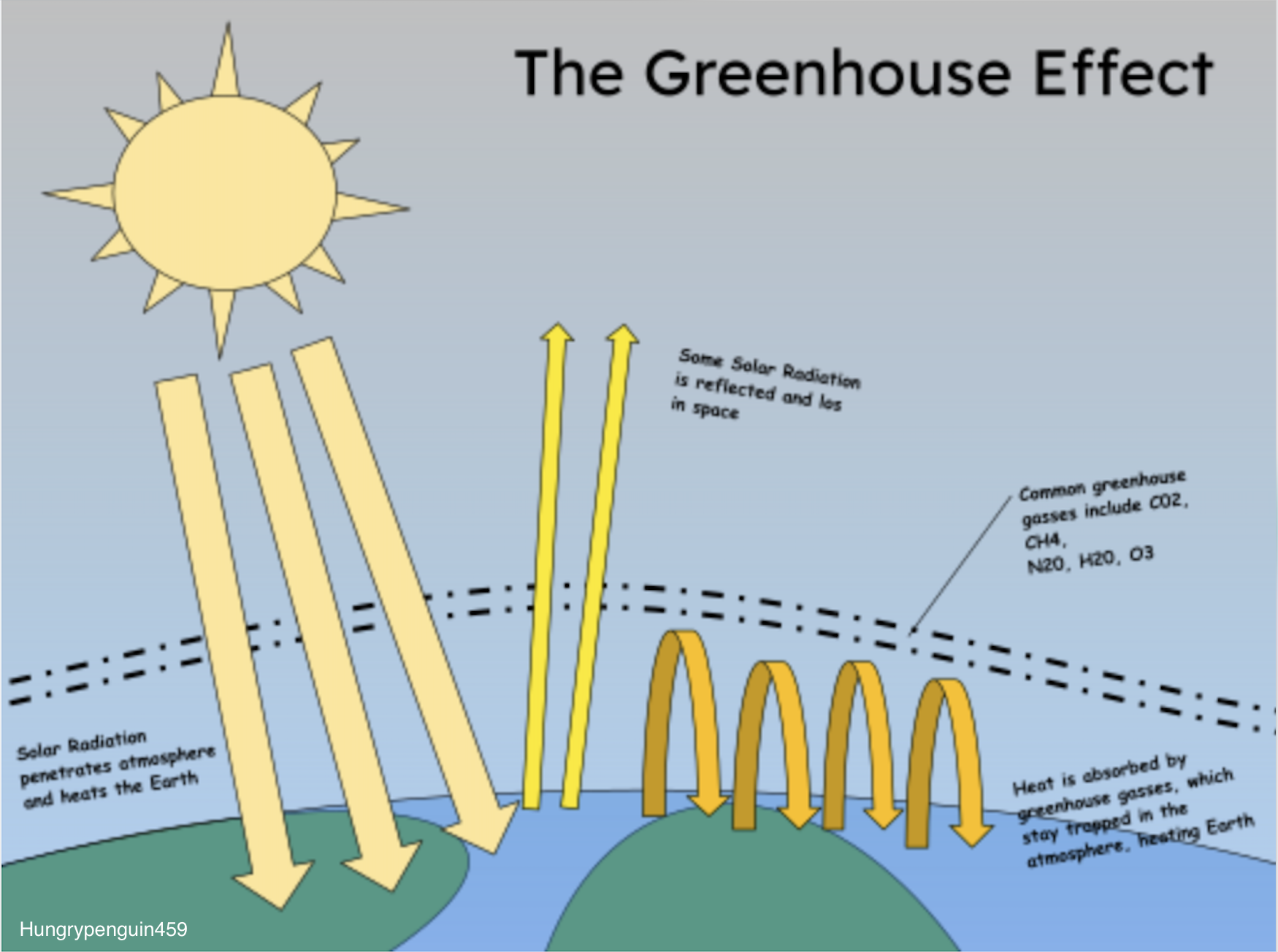
WHAT IS THE GREENHOUSE EFFECT?

The greenhouse effect is a natural and essential process that warms the Earth’s surface. It occurs when greenhouse gases like carbon dioxide (CO2), methane (CH4), nitrous oxide (N2O), and water vapour trap some of the heat that the Earth radiates after absorbing energy from the Sun. This trapped heat keeps the planet’s temperature within a range that supports life. warm enough to support life. However, human activities like burning fossil fuels, deforestation, and industrial processes have added more of these gases into the atmosphere, intensifying the greenhouse effect and leading to accelerated global warming and climate change. 


Aboriginal flag Torres Strait Islander flag

We acknowledge the Traditional Custodians of Country throughout Australia, whose sovereignty was never ceded. We acknowledge that Indigenous peoples around the world are at the forefront of climate change, both in experiencing its effects and leading solutions for change. We pay our sincerest respects to all Elders, past and present.