|
At Climate for Change, we focus on engaging the majority of Australians who care about how climate change is impacting our planet, and accept that the science is real.
Although people often think climate change deniers are the most important people to convince, they actually make up a really small percentage of our population, and are unlikely to change their mind. We can make a greater impact by encouraging people who may be unsure or anxious, to speak out and step forward into climate action.
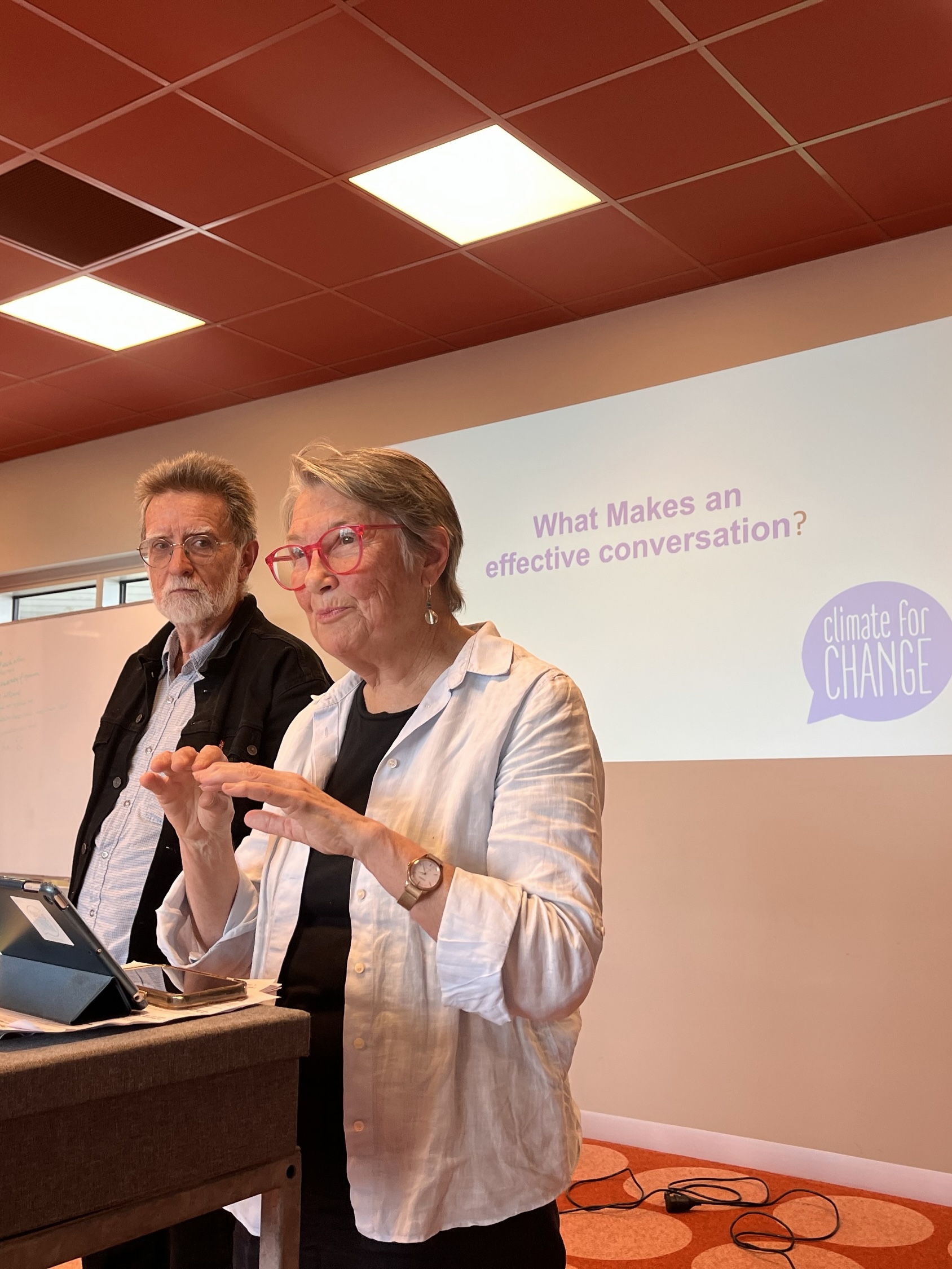
Here are some tips to keep in mind. Whether you're new to climate conversations or looking to sharpen your skills, you’ll learn how to start a non-threatening conversation, build on common ground, and foster productive dialogue, even if there are differing opinions.
If you want to learn more and practice your skills, join one of our training sessions.
 1. Create trust 1. Create trust
Without trust, a climate conversation is a non-starter, especially if the person you’re talking to comes from a different bubble to yours. Building trust is not about sharing facts or being right - it is built through authenticity. When people feel safe and supported to explore ideas with you, you can find answers to questions together.
-
Listen as much as you speak. No one person knows everything about every topic. By listening and thinking deeply about what is said to you, you encourage others to do the same for you.
-
Validate the feelings and concerns of the person you’re talking to (even when you don’t share them)
-
-
“I understand why it feels like there’s nothing we can do about climate change. I can feel overwhelmed by the problem sometimes too.”
-
“I get why you’re worried about people losing their jobs. This is something that is really important to me too.”
2. Foster autonomy
The golden rule to remember about climate conversation is “do not lecture”. By all means, keep the facts up your sleeve but remember that connecting through emotions and values will create the groundwork for the most effective conversation.
3. Connect through shared values
By identifying shared values, you can reframe the conversation to help the person you are talking to see your point of view.
-
Identify shared values
-
“I know you also care a lot about protecting our kids' futures. Maybe we can try a small action together some time?”
-
“I am really worried about people’s jobs too, and making sure things are fair. I think the big polluters should help us fund a fair transition to make sure workers can be employed in new sectors”
4. Take the time needed
Not every conversation about climate change will lead to immediate action — and that’s okay. Sometimes, the most valuable outcome is simply showing others that climate change is something you care about, and creating space for trust and connection. Other times, you’ll find the people around you share your concerns and are ready to act.
Either way, every conversation helps. Each time you speak up, you help build the social momentum needed for bold climate action — one conversation at a time.
|
