
|
|
| Australia’s current climate policies enable many industries to continue polluting without consequences, and fail to cut our national emissions fast enough. Carbon pricing is consistently found to be the most efficient and reliable way of driving large-scale emissions reductions, boosting economic productivity and keeping countries on track to meet its climate commitments. Introducing a strong, economy-wide carbon price in Australia would ensure pollution carries a real financial cost and create a powerful incentive for businesses to invest in cleaner technologies. | |
|
|
|
Background and context Former Treasury secretary Ken Henry and other respected economists continue to argue that the most economically efficient way to address carbon emissions is through an explicit carbon price. By attaching a cost to each tonne of greenhouse gas emitted, a carbon tax provides an economy-wide incentive for investment in cleaner technologies, energy efficiency and industrial transformation, forcing industry to emit less. Alternatively, if a company continues to emit, a financial penalty applies. A carbon tax is not a solution to the climate crisis, rather a market fix designed to increase the cost of carbon dioxide and therefore slowly make fossil fuels uncompetitive to renewable energy sources. Carbon pricing can take several forms, including an emissions trading scheme (ETS) or direct carbon tax - although science shows the effects of carbon taxes are stronger than those of an ETS. In the last 10 years, more than 70 carbon pricing instruments have been enacted universally and there is therefore overwhelming evidence on the effectiveness of carbon pricing. Recent global analyses covering more than 140 countries provided clear evidence that countries with carbon pricing mechanisms had lower carbon dioxide emissions without harming economic performance. There is also a significant body of evidence showing a carbon price would promote adoption of cleaner technology, boost Australia’s productivity and assist in budget repair. A carbon price is the only policy that will enable us to meet our national emissions reduction target in line with our obligations under the Paris Agreement, while also delivering economic benefits to the scale of $25 billion. Australia has previously had carbon pricing schemes in effect under the Gillard Labor government in 2012, however this legislation was repealed in 2014 under the Abbott Coalition government. So far, no government has been able to withstand industry pressure or provide the leadership necessary to make substantial changes. Although Australia has had the Safeguard Mechanism since 2016, it sets emissions limits to around 220 of Australia’s worst polluting industrial facilities but cannot impose a universal, direct price on carbon, leaving a clear policy gap. Two common approaches proposed in Australia include a ‘polluter pays’ levy, in which companies are charged for producing carbon pollution, and a ‘fair share’ levy, in which the profits earned from fossil fuels extracted in Australia are taxed for investment in public services. Why is this important?
Desired outcome
Who to contact
Resources:
Actions you can take 1. Email your MP and relevant Ministers If you need some help getting started with your email, here is an example. Please don’t copy it exactly - personalise it and tailor it to the MP you are writing to. In addition, when writing to a Minister or Shadow Minister, start by saying that you’re writing to them in their role as Minister for xxxx, otherwise they will probably just forward your email to your local MP. |
|
[MP name] [Member for …. or Minister for ….] Dear … [personal statement - who you are and why you care] While the 2023 reforms to the Safeguard Mechanism appeared promising, important limitations remain. These include weak emissions reduction ceilings and an overreliance on carbon credits and offsets. The scheme also only applies to around 220 facilities, covering less than 30% of Australia’s total domestic emissions, leaving a significant policy gap across the broader economy. Many economists, including former Treasury Secretary Ken Henry, have consistently argued that the most economically efficient way to reduce emissions is through an explicit price on carbon. By attaching a cost to each tonne of greenhouse gas emitted, carbon pricing creates a clear economy-wide incentive for businesses to invest in cleaner technologies, improve energy efficiency, and reduce pollution. International evidence strongly supports this approach. More than 70 carbon pricing mechanisms now operate globally, and research covering over 140 countries shows that jurisdictions with carbon pricing have achieved lower emissions without harming economic performance. The most recent IPCC report makes clear that the window for effective climate action is rapidly closing. Australia must take stronger and more immediate steps to reduce emissions, and an economy-wide carbon price would be a far more effective mechanism than relying solely on the current Safeguard Mechanism. I am contacting you to ask: Will you support the introduction of an economy-wide carbon pricing mechanism that places a clear financial cost on greenhouse gas emissions? If the Safeguard Mechanism is to remain, will you commit to strengthening it through enforceable emissions caps and reduced reliance on offsets? I look forward to your response. Sincerely, Name Address Phone (Note: your contact details are required if you want a reply) |
2. Call your MP or Minister's office
This is a way to respond instantly to an issue and only takes a couple of minutes.
Here is a suggested script to get you started:
|
Hi, my name is ….. and I’m a voter in [your electorate]. I’d like to speak to …..[name of MP] (Staffer will probably say: I’m sorry they’re not available, can I take a message?) Yes, thank you! Would you please pass on my message and let them know I’m concerned that Australia’s current climate policy is not strong enough to deliver the emissions reductions we need. The Safeguard Mechanism only applies to a small number of large facilities and relies heavily on offsets, which means it covers less than 30% of Australia’s emissions and may not drive real reductions. Many economists also agree that placing a clear price on carbon is the most efficient way to reduce emissions while encouraging investment in cleaner technologies. Could you please ask them to support the introduction of an economy-wide carbon pricing mechanism that places a clear cost on greenhouse gas emissions? And if the government continues to rely on the Safeguard Mechanism, will they commit to strengthening it with stronger emissions caps and less reliance on offsets? Thank you! |
3. Visit your MP
Nothing beats a face-to-face conversation. Email your MP’s electorate office to ask for a meeting and follow up with a phone call a few days later. Get help on how to do this under the Democracy and Governance heading on our Climate briefings webpage.
(last updated April 2026)
 Science says:
| IT'S ALREADY HAPPENING |
|
|
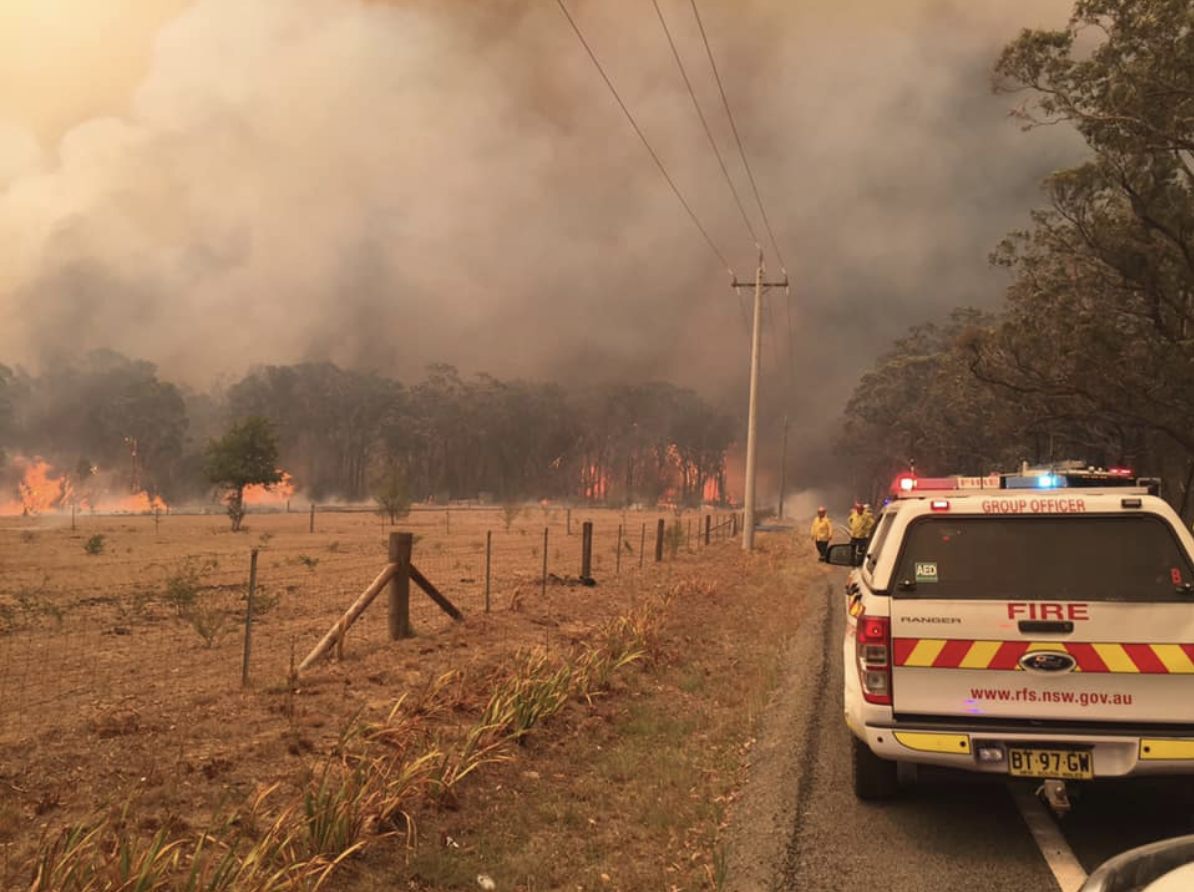 Australia is already experiencing climate change