|
Why is this important?
 A well-written letter to the editor of a newspaper or online media can be a powerful tool and are another way to educate and persuade people to the dangers of climate change and our warming planet. Published letters: A well-written letter to the editor of a newspaper or online media can be a powerful tool and are another way to educate and persuade people to the dangers of climate change and our warming planet. Published letters:
- Reach a large audience
- Advocate and raise awareness
- Can be used to stimulate community conversation about climate issues
- Create an image of widespread concern/support/opposition to an issue
- Can stimulate public interest and media coverage
- Can influence public opinion
- Can keep an issue going by preventing it from disappearing from the public eye
- Are often monitored by political organisations
- Can influence policy makers and MPs
Tips for increasing the chances of getting your letter published:
Keep it short and concise
- 100 to 200 words, the shorter the better
- Many newspapers (and even online media) have strict limits on the length of letters and have limited space to publish them
- Keeping your letter concise and brief will help assure that your important points are not cut out in the editing process (they reserve the right to edit your letter, usually for length!)
Keep it simple
-
Stick to one issue, and one or two main points
Make it relevant - reference a story or previous letter in the publication
While some papers/media publish general commentary, many will only publish letters that refer to a specific article. Here are some examples of easy ways to refer to articles in your opening sentence:
-
I was disappointed to see that [The Age’s May 18 editorial][Article heading] omitted some of the key facts in the debate.
-
I strongly disagree with [writer’s name] narrow view on [boosting economic recovery with gas development] [article heading and date]
-
I was deeply saddened to read that Environment Minister Sussan Ley is working to roll back environmental protections on major projects [Article heading and date]
Write engagingly
- Grab the reader’s attention with your key point in the first sentence
-
Use the “praise” sandwich:
- A positive first sentence thanking the newspaper, editor, journalist or letter writer (top slice of bread)
- A sentence or two describing the problem (filling)
- A sentence or two describing the solution (filling)
- A powerful, clever, witty last sentence or question (bottom slice of bread)
- Be direct
- Create emotion
- Use persuasive language
- Use facts and a key statistic
Only exclusive letters will be printed
- Don’t send your letter to more than one media organisation
- Newspapers/online media won’t publish letters they suspect have been sent elsewhere
- If you write regularly to other papers, make it clear you have not offered your letter elsewhere
Include your full name, address and phone number
- The media organisation may try to reach you to verify that you wrote the letter. If they can’t contact you, they won’t publish it
- If it is relevant or connected to the issue you’re writing about, include the organisation you work for, party, academic affiliations etc
Be timely
- If you’re writing in response to a news item, do it within 24 hours or it may be “old” news
- Submit before midday
Who to contact:
Australian Financial Review [email protected]
The Australian [email protected]
Herald-Sun https://www.heraldsun.com.au/news/opinion/letter-to-the-editor
The Courier Mail https://www.couriermail.com.au/news/opinion/letter-to-the-editor
The Age [email protected]
SMH [email protected]
The Guardian
Local and rural papers - reach more people than you might think!
Resources:
EXAMPLES OF PUBLISHED LETTERS
From the Lighter Footprints letter-writing group (follow the link for more recent examples)
|
It’s a climate calamity (Herald Sun, 31 October 2020)
PEOPLE without a science background appear to struggle with climate change. Even as someone with a science degree and much training in the sustainable space, the actual science behind climate change is difficult to understand.
So to Mr McArthur (YS, 29/10), it is like this. During the last mass extinction, the trees fell and fossilised into coal. When the oceans died they became oil and gas. Earth covered this up beneath great oceans of sand.
Through mass drilling, mankind has captured that energy and then burned it; the combustion releases the energy that makes things move.
On a massive scale we are releasing into the atmosphere the products of burning from so long ago. We are also reducing the capacity of the Earth’s forests to take back that carbon we release because we are bulldozing them so rapidly.
I hope I have offered a relatable scientific explanation that is not based on rosary beads over washing lines, although a prayer or two would not go amiss at present.
Sue King, Somers
(169 words)
|
|
Strong Message in Banks’ green move (Australian Financial Review, 4 June 2020)
It’s great news that our big banks and other financial institutions are building our first climate change risk avoidance Climate Measurement Standard Initiative (CMSI), and that it is based on climate science from five universities, the CSIRO and the Bureau of Meteorology (“Banks enlist scientists on climate”, AFR June 3).
The Australian Prudential Regulation Authority’s Christopher Lee pushed for such actionl;ast year when he urged that all finance must now be sustainable and green. That’s a fundamental message all other businesses and governments must act on.
The pressure on the Morrison government from these sources, plus climate-acting premiers, could soon become an irresistible force.
Barbara Fraser, Burwood, Vic
(104 words)
|
|
Australia’s energy plan is a pipeline to disaster (Australian Financial Review, 4 June 2020)
The federal government and Labor’s continuing support for a declining coal industry, and attempts to supercharge the gas industry, fly in the face of smart business and the community they are supposed to represent. (“QBE divests thermal coal, predicts a green boom”, True believer helping Macquarie turn green”, AFR June 2)
Big Investors clearly see the writing on the wall for fossil fuels, and that includes gas.
While the likes of QBE and Macquarie are basing their decisions on hard-nosed evidence that the rapid transition to renewable energy and storage is cheaper, more reliable, and cleaner than fossil fuels, why is the government still fluffing around with propping up unreliable coal-fired power stations and continental pipelines that risk our economy, jobs, environment and health.
William Chandler, Surrey Hills, Vic
(124 words)
|
From the Climate Council:
|
Extreme Weather and Community Impacts (Brisbane Times)
Your recent article “South-east Queensland is droughtier and floodier than we thought” (22 June 2018) hit home for me — literally and figuratively.
Born and raised in the Lockyer Valley, I have witnessed the devastating consequences of our extreme dry spells, and the worsening quality of our water — things that are destroying our communities. What angers me most is that no one is making the link between this and climate change.
Recently, the Climate Council released a report revealing that 57.4% of Queensland is in drought after the record-breaking high temperatures and dry winter of 2016/2017 — direct consequences of climate change. There could be real solutions for our communities if we and our representatives made this link, but our politicians are leaving us behind with their disregard for climate change and renewable power.
When will the change come?
Name, Suburb
(142 words)
|
(Last updated October 2025)
 Disturbing data: Disturbing data:
| ICE LOSS FROM GLACIERS AND ICE SHEETS |
|
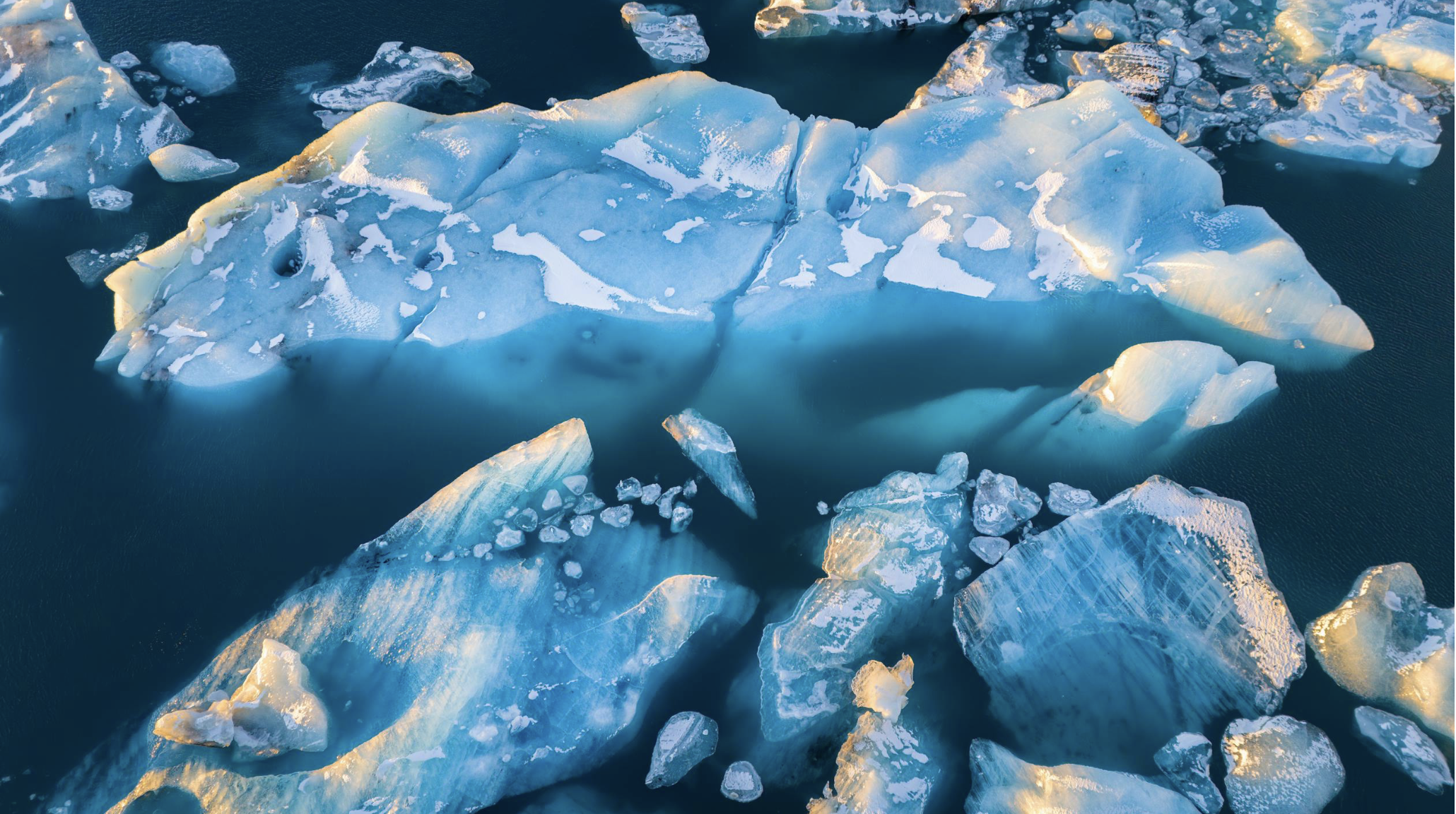 Global warming causes significant ice loss Global warming causes significant ice loss
Our world is losing ice at an alarming and record-breaking rate due to global warming. The world’s two major ice sheets, in Greenland and Antarctica, are together losing a combined 373 billion tonnes of ice mass per year. Glaciers across the globe, from the Alps to the Himalayas to the Andes, are also rapidly retreating, shrinking in both size and volume. In the Arctic, sea ice is melting earlier in the year and freezing later, with its overall extent shrinking by around 12.2% per decade since 2010. This widespread ice loss is a clear indicator of accelerating climate change. Glacier loss affects fresh water supplies for more than 2 billion people. Land ice sheet loss adds to sea level rise.
|
|
