
|
|
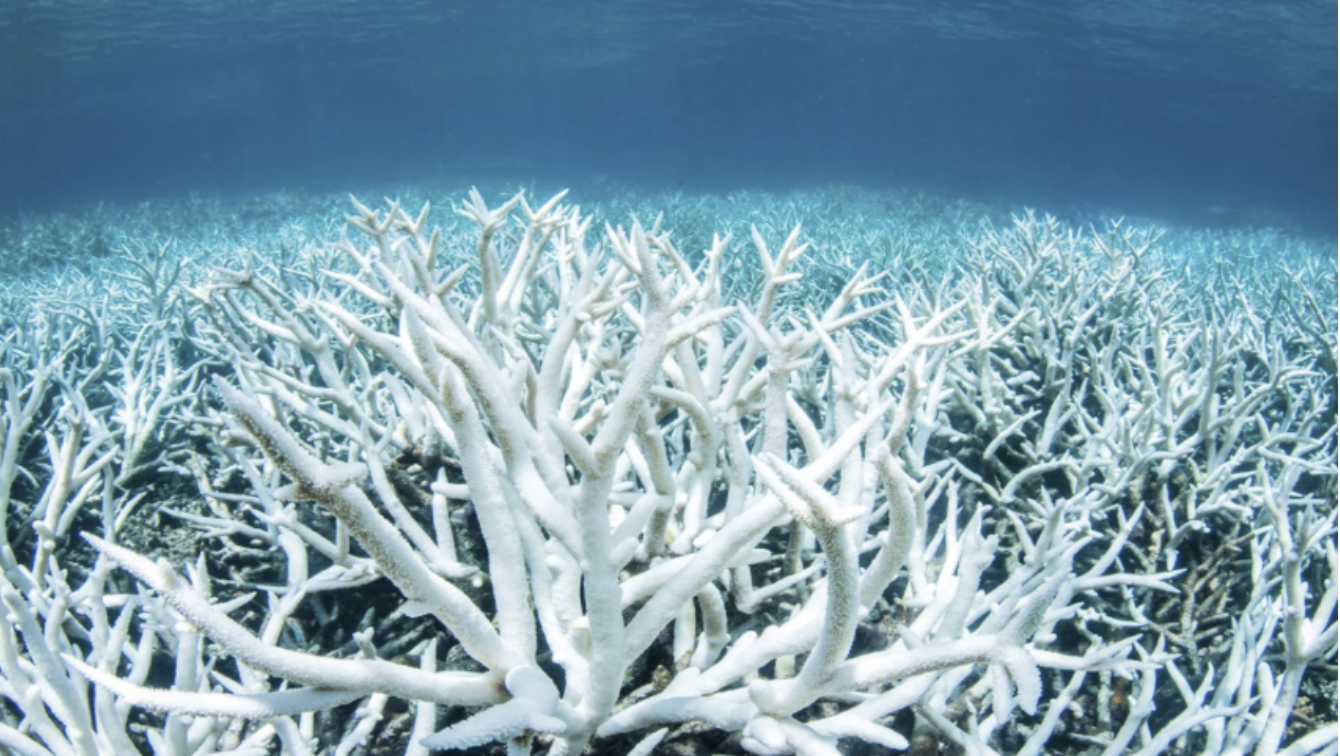
| The Great Barrier Reef - world’s largest coral reef and Australia’s greatest natural wonder - is rapidly deteriorating as record heat stress pushes it towards irreversible damage. Without urgent action to cut emissions and halt new fossil fuel developments, the Reef faces further catastrophic coral loss, threatening its biodiversity, cultural heritage, and the livelihoods of communities that depend on it. | |
|
|
|
Background and context: The 2,300km long Great Barrier Reef supports a stunning array of biodiversity and 1.2 million people along Queensland’s coastline. Despite its ecological and economic importance, it is increasingly vulnerable to a deadly combination of climate change impacts, including oxygen loss, acidification and extreme weather events, which are driving profound changes in the reef’s ecosystems including change in marine wildlife distribution and abundance, damage to mangrove and seagrass habitats, and increased frequency in outbreaks of disease. The most devastating of these impacts is increasing ocean temperatures. Climate change, driven by the burning of fossil fuels, is warming our oceans: the average sea surface temperature for the Great Barrier Reef has warmed by nearly 1°C since 1900 and marine heatwaves are increasing in frequency, intensity, duration and spatial extent. Warmer water is steadily pushing the Reef closer to the thermal limits of many coral species. In 2024 and 2025, the Great Barrier Reef experienced its fifth and sixth mass coral bleaching events since 2016 as a result of a months-long marine heatwave and the highest sea temperatures ever recorded on the Great Barrier Reef. The reef lost between one quarter and one third of its hard coral cover, with some of the worst affected areas losing up to 70% of their living coral. The Australian government considers marine heatwaves to be a key climate hazard because of their impact on cultural heritage, social identity and the economy. Nowhere is this more apparent than on the Great Barrier Reef, where ecological decline undermines Indigenous cultural connections and knowledge systems, erodes community identity and lifestyle, and jeopardises the multibillion dollar tourism industry that underpins Queensland’s coastal economies. All of the mass coral bleaching events on the Great Barrier Reef are associated with marine heatwaves driven by anthropogenic climate change. Australia’s National Climate Risk Assessment forecasts Australia’s oceans could be in a marine heatwave state for half of the year if high levels of emissions continue, more than ten times more than what is currently experienced - which would have catastrophic consequences for the Great Barrier Reef. The government acknowledges that climate change remains the biggest threat to the Great Barrier Reef, but despite investing billions of dollars into reef management and conservation programs, it is still not doing enough to protect the reef from climate harm. Australia’s 2035 emissions reduction target is not enough to keep warming close to 1.5°C - the threshold considered vital for coral reef survival - and the country remains one of the world’s highest per capita greenhouse gas emitters largely due to continued fossil fuel exports. New scientific analysis indicates that emissions from Woodside’s proposed Browse gas project alone could cause the loss of roughly 29 million additional coral colonies on the Great Barrier Reef during every future mass bleaching event - a stark reminder of what the Australian Government is willing to lose by backing new fossil fuel projects. Why is it important?
Desired outcomes
Who to contact:
Further Reading
Resources
Actions: 1. Email your MP or relevant Ministers If you need some help getting started with your email, here is an example. Please don’t copy it exactly - personalise it and tailor it to the MP you are writing to. In addition, when writing to a Minister or Shadow Minister, start by saying that you’re writing to them in their role as Minister for xxxx, otherwise they will probably just forward your email to your local MP. |
|
[MP name] [Member for …. or Minister for ….] Dear …
[Include a personal statement - who you are and why you care]
The Great Barrier Reef is in crisis. Repeated marine heatwaves and record sea temperatures in 2024 and 2025 have caused mass coral bleaching, with up to 70% of living coral lost in some areas. These events are fundamentally altering reef ecosystems, disrupting marine wildlife, and eroding Indigenous cultural connections and coastal lifestyles. Without urgent action, scientists warn that if global warming exceeds 1.5°C, mass bleaching could become far more frequent, putting the survival of the Reef at catastrophic risk.
Will you support deeper emissions reductions to keep global warming below 1.5°C and protect the Reef?
Will you oppose new fossil fuel projects, such as the proposed Browse gas development, that would drive further coral loss?
I look forward to your response. Sincerely
Name Address Phone (Note: your contact details are required if you want a reply) |
|
2. Call your MP Here is a suggested script to get you started: |
|
|
|
|
3. Visit your MP Nothing beats a face-to-face conversation. Email your MP’s electorate office to ask for a meeting and follow up with a phone call a few days later. Get help on how to do this under the Democracy and Governance heading on our Climate briefings webpage. |
(Last updated March 2026)
 Science says:
| HOW WILL HOTTER OCEANS AFFECT MARINE LIFE? |
|
|
 Warming oceans impact marine life