
|
|
|
Young Australians are being denied legal protection from the impacts of climate change. The Climate Change Amendment (Duty of Care and Intergenerational Climate Equity) Bill 2025 was voted down in Parliament, leaving children and future generations exposed to the impact of decisions that our politicians are making now - decisions that will likely worsen the climate crisis. Demand the government enshrine a duty of care into law so they are legally responsible for considering the climate impacts of their decisions on children and future generations. |
|
|
|
|
Background/context The original lawsuit aimed to prevent former Coalition Environment Minister Sussan Ley from approving Whitehaven Coal’s proposed expansion to the Vickery coal mine in NSW, arguing that she has a common-law duty of care to protect children from the harmful impacts of current carbon-emitting activities on their future. The judge did not grant an injunction, but he did rule that the Minister owed young Australians a duty of care to consider the impacts of climate change when assessing environmental planning applications. This legally required duty of care would have constrained the ability of both the government and the private sector to proceed with new fossil fuel projects. However, Ley then appealed the case, and the ruling was unanimously overturned by the Federal Court. The judges stated the duty of care was “based on the incorrect conclusion that human safety was an implied mandatory statutory condition under the Environment Protection and Biodiversity Conservation Act 1999.” Furthermore, the court said although the threat of climate change is indisputable, it’s the government’s job - not the court’s - to set policy on climate change. In 2023, Whitehaven Coal’s proposed expansion was approved as an investment, and construction began in 2024. Youth activist Anjali Sharma is now lobbying alongside her senator, David Pocock, to ask the Australian Government to enshrine the duty of care into law by supporting the Climate Change Amendment (Duty of Care and Intergenerational Climate Equity) Bill 2025. In October 2025, parliament voted against the bill, despite its “overwhelming community support” and only one submission that “outright opposed it”. This means the bill has now stopped progressing in Parliament, and cannot become law unless it is reintroduced and successfully passes both the House of Representatives and the Senate. As this case was passing through Australia's parliament and courts, and as Whitehaven Coal’s expansion was approved and developed, we were experiencing the warmest three years on record: 2023-2025 experienced a three-year average temperature of 1.48°C above preindustrial levels. If climate change continues on its current path, almost every child in the world is expected to experience multiple heat waves per year, significantly impacting their health and education. In the absence of Duty of Care legislation, our elected representatives currently do not have a legal obligation to protect children and future generations of Australians from the impacts of climate change. In July 2026, the ACT included a duty of care to future generations in its new 2026 - 2036 Climate Strategy. This marks Australia's first duty of care at any level of government. Why is this important?
Desired outcomes:
Who to contact:
Resources:
Action you can take: 1. Email your MP and/or relevant Ministers: If you need some help getting started with your email, here is an example. Please don’t copy it exactly - personalise it and tailor it to the MP you are writing to. In addition, when writing to a Minister or Shadow Minister, start by saying that you’re writing to them in their role as Minister for xxxx, otherwise they will probably just forward your email to your local MP. |
|
[MP name] [Member for …. or Minister for ….] Dear … [Include a personal statement - who you are and why you care] I am writing to urge you to push for a legally mandated duty of care from the government to protect the children and future generations of Australia from climate change impacts. If we continue on our current trajectory, our children are going to suffer immensely from the effects of climate change. They will experience heat stress, natural disasters, smoke inhalation, rising costs of living, and increased social and political tension. Climate change will cost Australia hundreds of billions of dollars, and our children will be responsible for paying for it. Our elected officials have a moral obligation to protect our children, but unfortunately, not a legal one - as illustrated by the overturning of the Sharma case. It’s time to strengthen the laws to ensure a safe future for all Australians. The ACT Government has now implemented a Duty of Care in their 2026-2036 Climate Strategy, and I would like to see the federal government follow this lead. Will you urgently push to enshrine a legal duty of care to preserve the environment and prevent the impacts of climate change, from the government to Australian children and future generations? Will you enact climate and environment policies to provide a safe future for our children? I look forward to your response. Sincerely, Name Address Phone (Note: your contact details are required if you want a reply) |
2. Call your MP or Minister's office
This is a way to respond instantly to an issue and only takes a couple of minutes.
Here is a suggested script to get you started:
|
Hi, my name is ….. and I’m a voter in [your electorate]. I’d like to speak to …..[name of MP] (Staffer will probably say: I’m sorry they’re not available, can I take a message?) Yes, thank you! Would you please tell them I’m worried about…. (use points from the briefing above) And ask them to …. (see desired outcomes above) Thank you! |
3. Visit your MP
Nothing beats a face-to-face Meeting! Email your MP’s electorate office to ask for a meeting and follow up with a phone call a few days later. Get help on how to do this under the Democracy and Governance heading on our Climate briefings webpage.
(Last updated August 2026)
 Get informed:
| WHAT IS THE PARIS AGREEMENT? |
|
The Paris Agreement is a landmark global treaty adopted in 2015 under the United Nations Framework Convention on Climate Change (UNFCCC) to address the urgent threat of climate change. Nearly every country in the world has signed on (including Australia), agreeing to work collectively to limit global warming to well below 2°C above pre-industrial levels, with an aspirational goal of keeping warming under 1.5°C. The agreement requires each country os submit and update nationally determined contributions (NDCs), which is a climate action plan that outlines emissions reductions and adaptation efforts. It also calls for wealthier nations to provide financial and technical support to help vulnerable countries respond to climate impacts. |
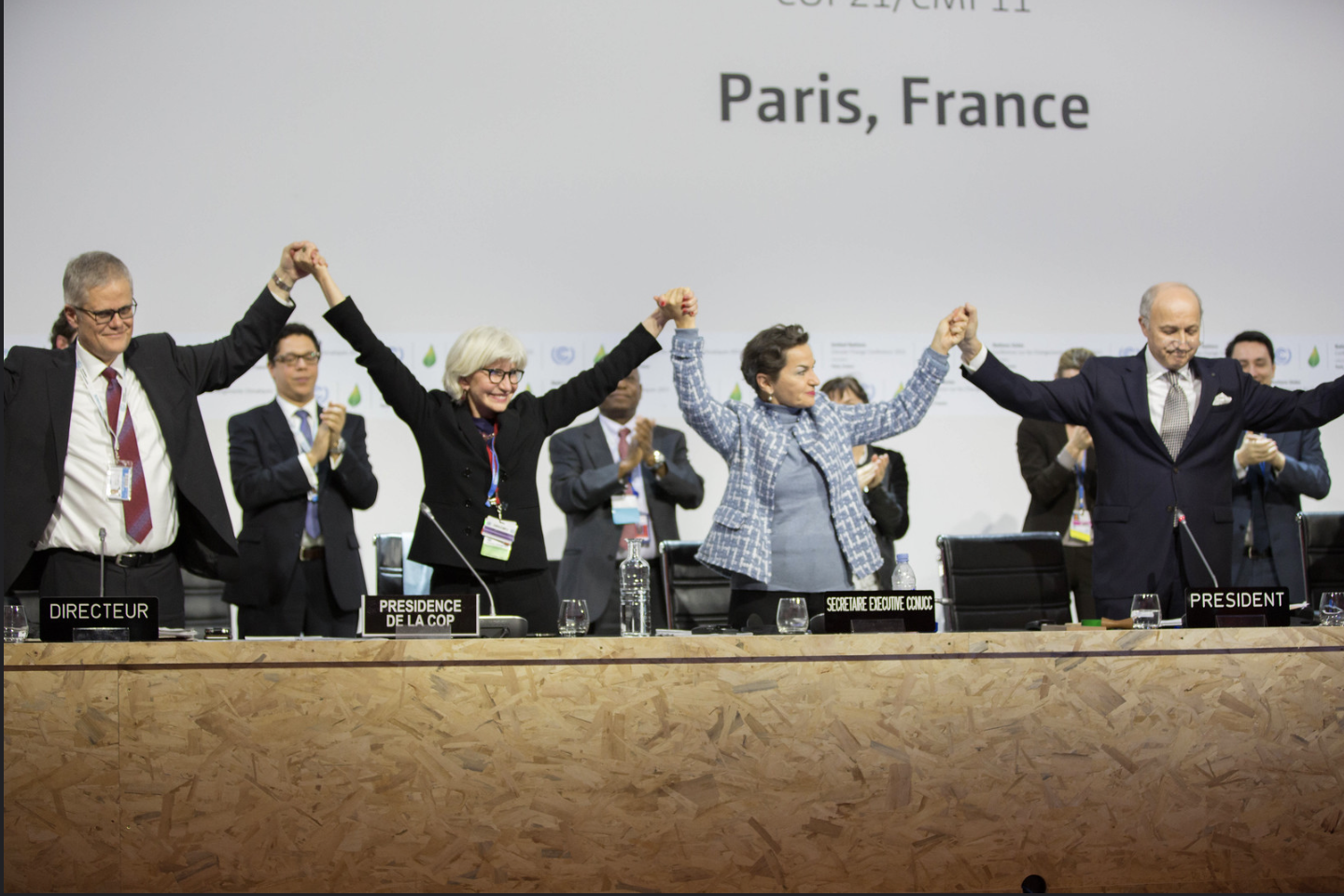 International commitments to address climate change