
|
|
|
In their first term, the Labor Government promised a new, stronger Nature Positive Act, implementing all 38 recommendations of the 2021 Samuel review into the existing weak and old environment laws (Environment Protection and Biodiversity Conservation Act, 1999) which is no longer fit for purpose. On October 30 2025, the long-awaited reforms to this bill - presented as the Environment Protection Reform Bill 2025 - were tabled in parliament. After significant negotiations during Parliament’s last sitting week in 2025, a deal was reached with the Greens on 27 November, which will allow the reformed legislation to pass the Senate with some amendments to better protect our environment from harm. But despite this deal, the proposed revised legislation is still widely considered to be inadequate for many reasons. |
|
|
|
|
Background: The EPBC Act is the only federal legislation that protects our environment from the adverse effects of projects such as coal mining, gas drilling, fracking, power stations, and land-clearing. For a long time, these laws have been criticised for their failure to protect the environment. Our continuing and increasing deforestation, particularly of native and old-growth forest, our global leadership in mammal extinction and biodiversity loss, and our poor performance on climate action are a testament to the failings of the existing legislation. The Samuel Review (January 2021) recommended reforms to ensure strength, consistency and independence in the compliance and enforcement system, and provided 38 suggestions. On 30 October 2025, the reforms were introduced to Parliament as the Environment Protection Reform Bill 2025 and six related bills. After significant negotiations, a deal was reached with the Greens on 27 November 2025. The bills passed the Senate on 27 November 2025 and the House of Representatives on 28 November 2025, and received Royal Assent on 1 December 2025. It is the biggest change to federal environment law in 25 years. Passing the law was only the first step. The details that will actually govern decisions, the National Environmental Standards, are still being finalised throughout 2026, and reforms are commencing on a rolling basis, with full commencement due by 1 December 2026. The National Environmental Protection Agency (NEPA), Australia's first federal environmental regulator, began operating on 1 July 2026. In March 2026, the Senate committee that scrutinised the reforms handed down 14 recommendations for strengthening the Standards, recommendations the Government is not obliged to accept. Environmental groups have criticised the revised draft Standard released in April 2026 as a significant backwards step from the already criticised first draft. Despite the reforms, the new laws are still widely considered inadequate for many reasons, not limited to:
The Senate Environment and Communications Legislation Committee tabled its final report in March 2026, after continuing its inquiry beyond the passage of the Bills because of the size and complexity of the reforms. It made 14 recommendations, mostly about finishing the Standards and the offsets regime properly. The Government does not have to accept these recommendations. Contacting your MP now can help build pressure for the Government to adopt them, and to keep strengthening the Standards that are still being written. Why is this important?
Who to contact:
Resources:
Actions you can take: 1. Email your Senators, MP and/or Minister If you need some help getting started with your email, here is an example. Please do not copy it exactly. Personalise it and tailor it to the MP you are writing to. When writing to a Minister, start by saying that you are writing to them in their role as Minister for xxxx, otherwise they will probably just forward your email to your local MP. |
|
[MP name] [Member for .... or Minister for ....] Dear ... [Include a personal statement, who you are and why you care] I am writing about Australia's new national environment laws, the Environment Protection Reform Act 2025, which passed Parliament in November 2025. While the reforms were a step forward, the detail that will decide how well nature and climate are actually protected, including the National Environmental Standards, is still being finalised through 2026. I do not believe the current drafts provide enough meaningful protection for our climate or environment, and it is important to me that we end up with stronger, enforceable laws that safeguard Australia's people, climate, biodiversity, and ecosystems. I urge you to ensure the following: Make our nature laws consistent with a net zero future. Require full disclosure of Scope 1, 2 and 3 climate pollution, and require the government to consider that pollution when making decisions, so it can stop projects that would cause significant climate harm. Adopt the Senate Committee's recommendations. Strengthen the National Environmental Standards before they are locked in, in line with the Committee's March 2026 report. Safeguard biodiversity and ecosystems. The Standards must prevent habitat destruction, protect threatened species, and maintain healthy natural systems that underpin our environment, culture, economy, and quality of life. I look forward to your response. Sincerely, Name Address Phone (required if you want a reply)
|
|
2. Call your MP or Minister's office This is a way to respond instantly to an issue and only takes a couple of minutes. Here is a suggested script to get you started: |
|
|
|
|
3. Visit your MP Nothing beats a face-to-face conversation. Email your MP’s electorate office to ask for a meeting and follow up with a phone call a few days later. Get help on how to do this under the Democracy and Governance heading on our Issue briefings webpage. |
(Last updated September 2026)
 Disturbing data:
| WHERE IN AUSTRALIA WILL TEMPERATURES RISE THE MOST? |
|
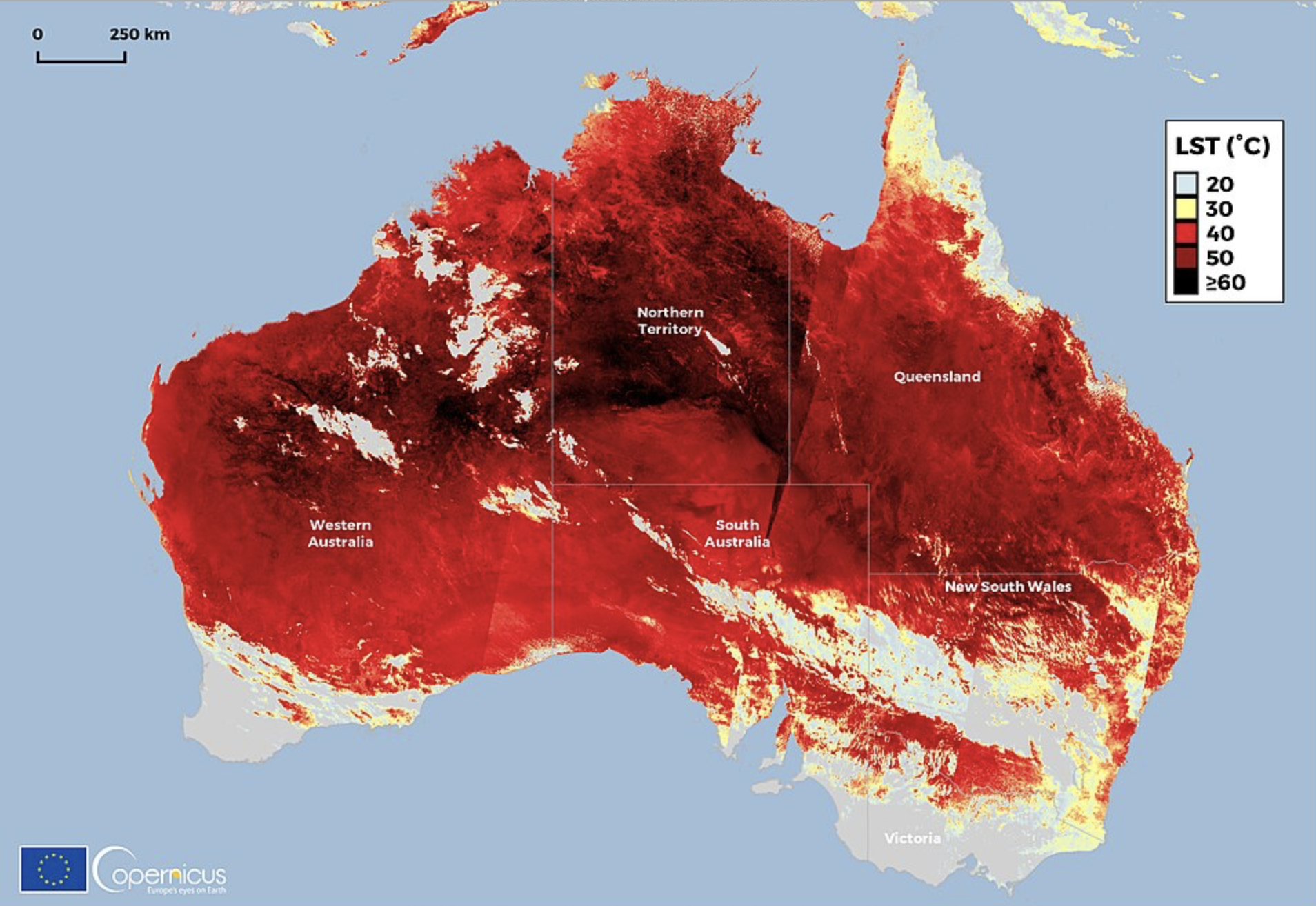
Extreme heat is one of the most severe consequences of climate change that Australia will experience. Global warming has already led to an increase in the frequency of extreme heat events. In the coming decades, Australia will experience further changes in its weather and climate, including increased air temperature, more extreme heat, and fewer cold extremes. The federal electorates of Hunter, Richmond, Page, Robertson and Dobell in NSW, Nicholls in Victoria, and Brisbane in QLD are among the most at-risk of extreme heat, and it is expected that there will be impacts on health, livelihoods, and infrastructure as more hot days are experienced in these areas. How does your town compare? |
 Will it soon be too hot to live in Australia?